
Mock-up mockery
Learning through laughter

Sometimes the best way to come to the right answer is by having a laugh about it.
John Beasley posed an interesting question last week about whether recruiters should have pricing pages. Should you be upfront about your rates? Does uncertainty around price scare off clients more than showing them your price early on?
In a word, my answer is ‘no’ (more on that later). But what really caught my eye was this pricing page that John had created as a joke:
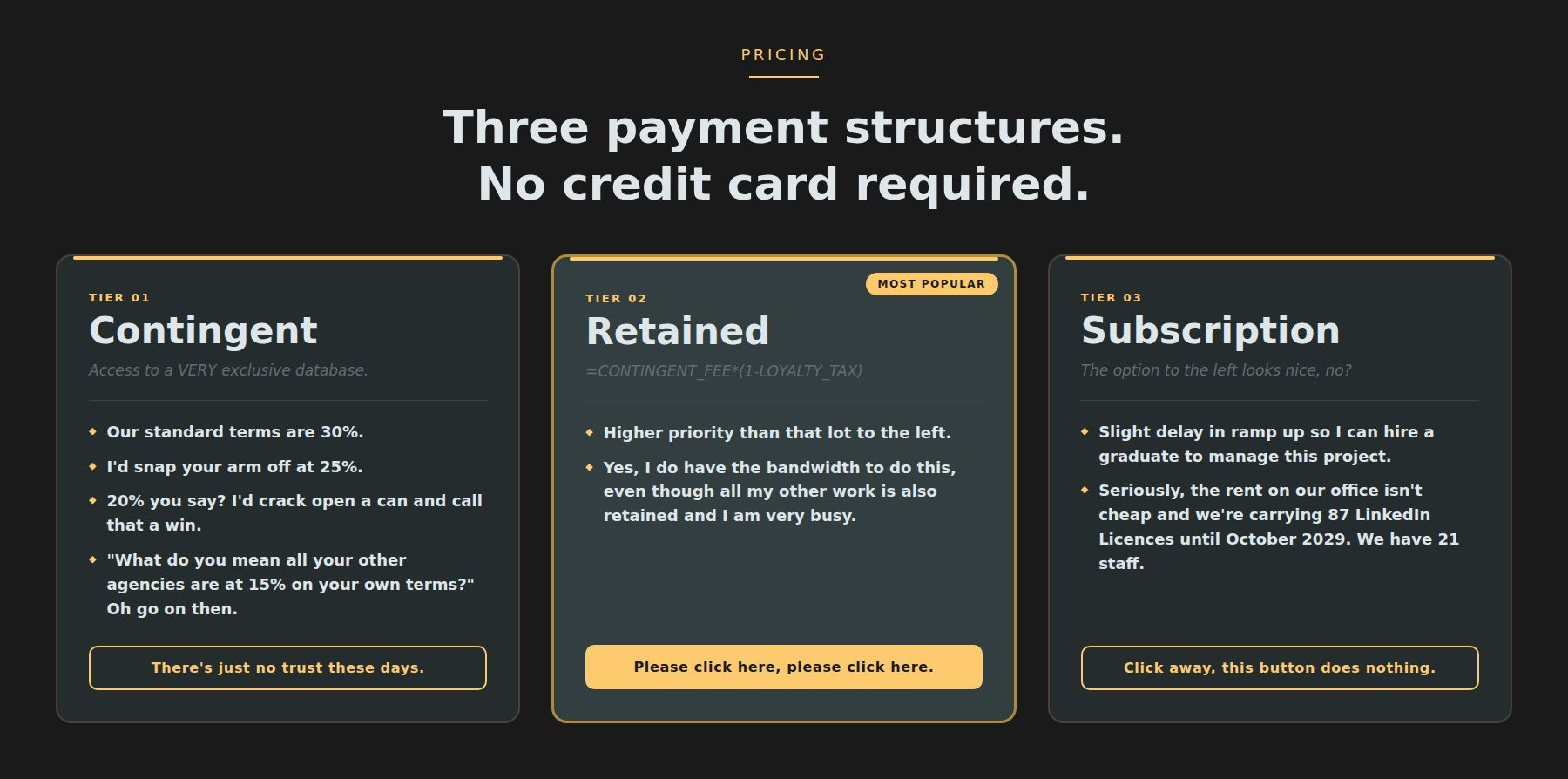
It’s worth zooming in to catch all the references to what goes on in your head when you’re working out your pricing.
While the words made me laugh, the underlying concept - having three levels of service to meet the needs of different clients - is a seriously good idea. By mocking the cliche of a bad pricing model, we can learn the right way to
Here are three of my highlights from John’s model, plus a note on why you should probably do the opposite:
1. Please click here, please click here
The buttons for each option give away the recruiter’s true feelings. The top tier button does nothing because it’s just there for show, and the first tier is the last thing they want. Everything is set up to push the client - every client - into choosing the middle option, because that’s what the recruiter wants.
In reality, when you create a smart pricing model all three options should work for you. There are no decoys or upsells; each client chooses the right option for them, and you’re happy with every outcome.
2. I am very busy
John’s middle option sells against the contingent service. How lucky that he’s able to take on a high-priority role despite being so very busy with all his other high-priority roles!
In reality, selling against your own services just makes your client think less of you. They may only want the cheaper option for their current role… and yet you’re telling them that they’ll be deprioritised because they haven’t paid you enough?
3. Our rent isn’t cheap
The top option is expensive because we need to cover our costs. The only thing missing here is those cartoon puppy dog eyes pleading with the client to pay us what we need.
In reality, clients - like all humans - only care about themselves. When it comes to recruitment, they’ll pay for the right outcome but have zero interest in the fact our LinkedIn licenses have gone up 30% in the last 18 months. That’s your problem, not theirs.
This reminds me of a big (huge) proposal that went into a major UK bank. Their feedback? “Stop telling us all the things you do in your business, tell us how you’re going to make our business better.”
Creating a smart pricing model that offers your clients a choice of approaches and engages them in conversations around value is a great way to improve your business. I’ve helped recruitment agencies win more retainers, land higher fees, and land higher-value clients by doing this.
Taking a sideways look at the wrong way to do your pricing strategy can help you see the right way to do it. If you’d like my advice on how you can improve your strategy, simply reply to this email and I’ll explain how a one-off value workshop might be all you need.
Jon
P.S. To answer John’s original question in a little more detail, here’s why you shouldn’t have a transparent pricing page.
Recruitment is a complex service, and our clients’ needs are also complex. Leading with price can make sense for a simple product where the requirements are clear, but that’s a mile away from most recruitment.
Recruiters might be seen as ‘all the same’ but there are huge differences in quality, suitability and approach. Clients don’t need to judge us on price; they need to spend time with us to find the right recruiter for them.
We are consultants, not e-commerce. I’m happy for people to self-serve when they’re buying a-tenner-a-month software, but consultants need to be selling consultatively if they’re going to have any chance of winning high-value business.
If you’d like my advice on how you can improve your strategy, simply reply to this email and I’ll explain how a one-off value workshop might be all you need.